

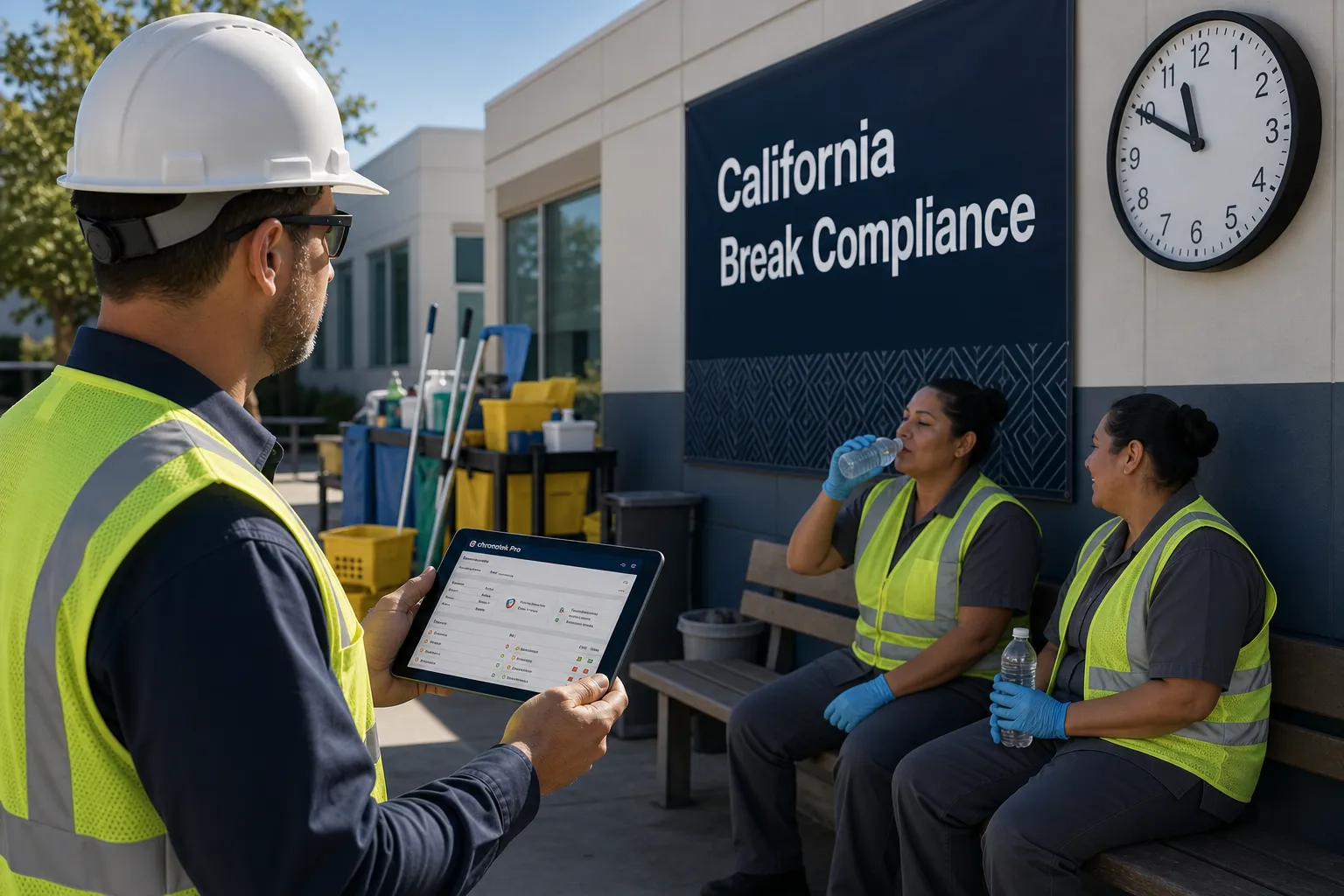
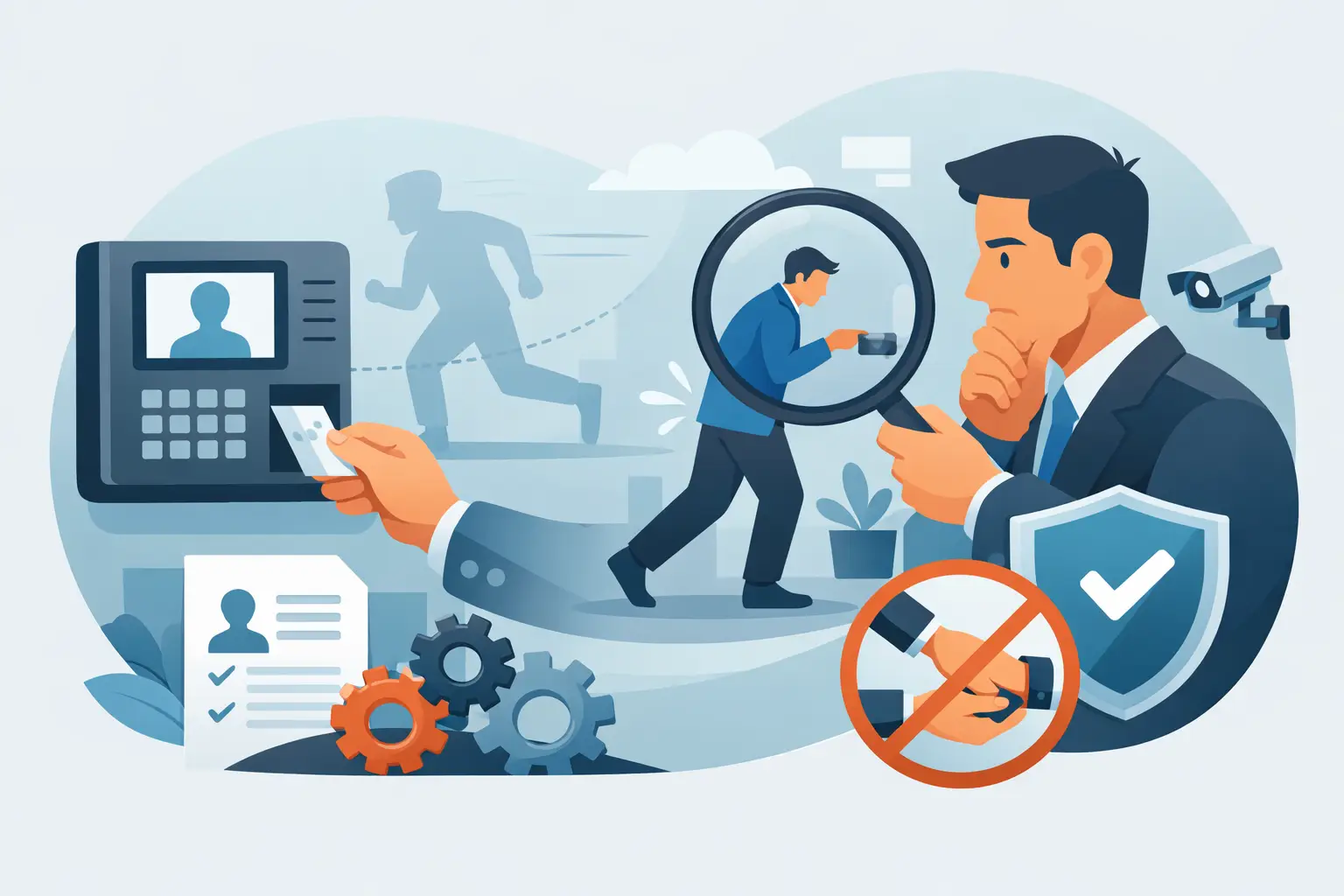
One employee clocks in from the parking lot. Another clocks in for a coworker who is still at home. By the time payroll catches it, the labor dollars are already gone. If you are figuring out how to stop buddy punching, the real issue is not just time theft. It is a visibility problem that affects payroll accuracy, schedule coverage, customer trust, and job profitability.
For companies with crews spread across customer sites, buddy punching usually happens because the clock-in process leaves room for guesswork. Managers are not standing at every building, job trailer, or post. Employees may start at different times, move between sites, or work without direct supervision. When your process relies on trust without verification, bad punches slip through - and even good employees can get pulled into a bad habit.
- Buddy punching is usually a visibility problem, not a discipline problem - it thrives when clock-ins are not tied to a verified time, place, and person.
- GPS-based mobile clock-ins confirm an employee was at the correct location when they clocked in.
- Telephone clock-in gives fixed sites without smartphones a simple, verified option.
- Real-time alerts let managers catch bad punches while the shift is happening, not after payroll runs.
- A workforce platform like Chronotek Pro combines verified time capture, scheduling, location confirmation, and issue visibility in one system.
Why buddy punching keeps happening
Buddy punching is rarely caused by one thing. Sometimes it starts with an outdated time clock that can be used by anyone standing nearby. Sometimes a supervisor is covering too much ground and cannot verify arrivals in real time. In other cases, employees are trying to help a late coworker avoid trouble, not realizing the financial impact on the business.
That is why the fix is not a memo reminding everyone to be honest. Policies matter, but policy alone does not close operational gaps. If your team can still clock in from the wrong place, clock in for someone else, or clock in without a clear tie to the job site, the system is still vulnerable.
The best way to reduce buddy punching is to make time collection more accurate at the point of entry. When the system verifies who clocked in, where they were, and whether the punch matched the schedule, you remove most of the opportunity before it reaches payroll.
How to stop buddy punching with better time verification
If you want a lasting answer to how to stop buddy punching, start by replacing broad, trust-based clock-in methods with controls built for field teams. The stronger your verification at clock-in, the less time your office spends correcting errors later.
GPS-based mobile clock-ins are one of the clearest improvements for off-site workforces. Instead of simply recording a time entry, the system can confirm the employee was at the correct location when they clocked in. That matters for janitorial, security, construction, and facilities teams working across multiple customer locations. A punch tied to the actual job site is far more reliable than one entered from anywhere.
Telephone clock-in can also be effective when employees work at fixed sites without smartphones or when a location needs a shared, simple option. A site-based phone number creates a tighter link between the employee and the assigned location. It is not the right fit for every environment, but for some recurring service accounts, it adds structure without adding complexity.
Job-site controls make this even stronger. When you limit where valid punches can happen, you reduce gray areas. Employees know the process. Supervisors know what to expect. Payroll gets cleaner data from the start.
There is a trade-off here. The more precise the controls, the more important it is to make the process easy for employees to follow. If clock-in procedures are confusing or slow, teams will find workarounds. The goal is accurate time capture with as little friction as possible.
Scheduling and buddy punching are connected
Many companies treat scheduling and timekeeping as separate problems. In practice, they are tightly connected.
When schedules are loose, late arrivals and coverage gaps create pressure in the field. That is often when buddy punching happens. Someone is running behind. Another employee is already on site. A supervisor wants the shift to look covered. Without a system that shows who is assigned, who has arrived, and who has not, small exceptions turn into payroll errors.
A tighter scheduling process helps prevent that. When employees clock into assigned shifts and managers can quickly compare planned labor against actual arrivals, exceptions become visible fast. If someone misses a shift, the office can respond right away instead of discovering it after the customer complains or after payroll is processed.
This is especially important for recurring service work with narrow labor margins. A few unverified punches across multiple sites each week can quietly erode profitability. The problem is not always dramatic. More often, it is persistent and expensive.
Real-time alerts matter more than after-the-fact reports
Reports are useful, but they are not enough if they only tell you what went wrong yesterday.
To stop buddy punching consistently, managers need visibility while the shift is happening. Real-time dashboards, alerts for early or unexpected punches, and exceptions tied to schedule mismatches help operations teams respond before a bad entry becomes an approved payroll record.
That does not mean every alert needs immediate action. Some exceptions are legitimate. Traffic delays happen. Employees get reassigned. A supervisor may need to shift coverage between nearby buildings. What matters is that the office can see the exception, confirm what happened, and keep a clean record.
This is where many workforce systems either help or create more noise. If alerts are too broad, teams ignore them. If they are targeted to real attendance risks, they become operationally useful. The right setup depends on how your jobs are staffed, how often employees move between locations, and how much day-to-day change your operation handles.
Clear accountability works better than heavy-handed enforcement
Companies often ask whether the solution is stricter discipline. Sometimes discipline is necessary, especially when a pattern is clear. But if your only response to buddy punching is punishment, you are treating the symptom after the cost has already hit the business.
A better approach is clear accountability supported by a system employees can understand. Make the rules simple. Explain how clock-ins are verified. Train employees on the correct process at hire and reinforce it when they transfer to new sites or schedules. Then make sure supervisors follow the same standard every time.
Consistency matters. If one branch manager overlooks exceptions and another investigates every mismatch, employees get mixed signals. Good controls lose value when enforcement depends on who happens to be in charge that day.
The strongest operations create a straightforward chain of accountability. Employees know how to clock in correctly. Supervisors can verify attendance without chasing paper timesheets. Payroll receives approved records instead of guesses and corrections.
Use data to find where the problem starts
If buddy punching is showing up often, look for patterns before you make broad changes.
You may find the issue is concentrated at a few sites with weak supervision, shared devices, poor schedule communication, or frequent late arrivals. You may discover that one customer location has unreliable connectivity and employees are improvising clock-ins. Or you may see that certain shifts have more exceptions because start times are unrealistic.
This is why visibility matters. Good data lets you fix the source of the problem instead of blaming the whole workforce. In many operations, only a small percentage of sites or teams generate most attendance exceptions.
A workforce management platform like Chronotek Pro can help by combining verified time capture, scheduling, location confirmation, and issue visibility in one system. That gives managers a clearer operational picture, not just a stack of time records.
Build a process that payroll can trust
Payroll should not be the department that discovers attendance fraud, missing shifts, or unexplained labor overages. By that point, the cleanup is slower, more expensive, and more frustrating for everyone involved.
A reliable process starts in the field. Time entries should be tied to the employee, the location, and the shift. Exceptions should be visible before payroll review. Supervisors should have an easy way to verify and approve time. Office staff should not have to chase texts, handwritten notes, or verbal explanations to understand what happened on a job.
If you are serious about how to stop buddy punching, think bigger than stopping one bad behavior. You are building a system that protects payroll accuracy, strengthens job-site accountability, and gives your team better control over labor costs.
That kind of control does more than reduce time theft. It helps you staff jobs with confidence, respond faster to missed coverage, and protect the margins that keep service contracts healthy. When the clock-in process is verified, simple, and visible in real time, buddy punching has a lot less room to survive.
The most effective fix is usually not more paperwork or more chasing. It is a cleaner operational system that shows who is working, where they are, and whether the time on the record matches the work on the ground.
How to prevent buddy punching on construction sites
Construction teams ask about buddy punching more than almost anyone, and the reason is structural: crews are spread across job sites, start times shift with the work, and there is no fixed wall clock or front desk at a job trailer. A shared punch clock or a paper sign-in sheet riding in the foreman's truck can be filled in by anyone, and a superintendent covering several projects cannot personally verify every arrival. The fix is to make the verification travel with the crew and live at the site itself.
Three controls do most of the work for construction companies. First, give every worker a unique login on their own phone, so a punch is tied to one person instead of a shared device. Second, tie each punch to the job site: a GPS clock-in with a geofence around the project confirms the worker was actually there, and alerts fire when someone leaves the site while still on the clock. For sites where you want on-site proof stronger than GPS, TimeTiles™ can be affixed at the construction site - workers must be close enough to physically tap the tile to clock in, and no power or wiring is needed at the site.
Third, connect punches to schedules. When each crew member clocks into an assigned shift at an assigned project, late and no-show alerts tell the office within minutes which sites are actually covered - so a buddy cannot quietly make an absent worker look present, and a live map shows where every crew member is clocked in across all of your projects. As crews move between sites during the day, clocking into each job separately also creates travel records, which keeps hours honest between locations, not just at the first arrival.
Frequently Asked Questions
What is buddy punching?
Buddy punching happens when one employee clocks in or out for a coworker who isn't actually on site - for example, clocking in from the parking lot or clocking in for someone still at home. It usually isn't caused by one bad actor; it's a sign that the clock-in process doesn't verify who is punching in, where they are, or whether the entry matches the schedule. Left unchecked, it quietly erodes payroll accuracy and job profitability.
How does GPS clock-in stop buddy punching?
GPS-based mobile clock-ins confirm that the employee was actually at the correct location when they clocked in, rather than simply recording a timestamp. For janitorial, security, construction, and facilities crews working across multiple customer sites, tying the punch to the job site removes most of the guesswork that lets buddy punching happen, and gives supervisors a reliable way to verify attendance without chasing paper timesheets.
Is buddy punching illegal?
Buddy punching is a form of time theft, and paying for hours that weren't actually worked creates real cost exposure for a business. More importantly for daily operations, it corrupts payroll accuracy, customer billing, and job costing. The most effective response isn't punishment after the fact - it's closing the verification gap at clock-in so bad punches can't reach payroll in the first place.
What's the best way to catch buddy punching before it hits payroll?
Real-time alerts matter more than after-the-fact reports. Dashboards that flag early or unexpected punches, or exceptions tied to schedule mismatches, let managers confirm what happened while the shift is still in progress instead of discovering a problem during payroll review. A workforce platform like Chronotek Pro combines verified time capture, scheduling, location confirmation, and issue visibility in one system, so exceptions surface before they become approved payroll records.
Can telephone clock-in stop buddy punching for employees without smartphones?
Yes. Telephone clock-in works well when employees work at fixed sites without smartphones or when a location needs a simple, shared option. A site-based phone number creates a tighter link between the employee and the assigned location, adding verification without adding complexity. It isn't the right fit for every environment, but for recurring service accounts with a stationary post, it closes a common gap.
How do I find out where buddy punching is happening in my company?
Look for patterns instead of making broad changes. Buddy punching and other attendance exceptions are usually concentrated at a small number of sites with weak supervision, shared devices, poor schedule communication, or unrealistic start times. Good data lets you fix the source of the problem instead of blaming the whole workforce - in many operations, only a small percentage of sites or teams generate most of the exceptions. See our guide on stopping time card padding for related tactics.
What's the best way to prevent buddy punching on construction sites?
Put the verification on each worker's phone and at the site itself, because construction crews rarely have a fixed clock or a supervisor at every location. A unique login ties each punch to one person, a GPS clock-in with a geofence around the project confirms the worker was actually on site, and an NFC TimeTile™ affixed at the site requires workers to be close enough to physically tap it to clock in. Add late and no-show alerts on scheduled shifts, and a buddy can no longer make an absent crew member look present.
How do you eliminate buddy punching when crews move between job sites?
Tie every punch to the specific job site instead of one central clock. When workers clock into each project separately, a geofence verifies each arrival, alerts fire if someone leaves a site while on the clock, and travel records are created between jobs - so hours stay honest across every stop, not just the first one. A live map showing where every crew member is clocked in lets a superintendent covering multiple projects verify coverage without driving site to site.